Find loved ones.
Even when the internet is down.
Global Web Production / Standalone Radio Mesh Network
NGTlink™, Your Starlink on the Ground
Phase 1: Active Digital Twin / Global Web Directory
Phase 2: Standalone Radio-Mode Hardware Queue
Folio-Pin's LoRa Safety hardware pairs a sub-GHz radio chip with the folio-pin app to give parents real-time child location — through the mesh network — even when cell towers and Wi-Fi are completely offline.
Four form factors. One mesh signal.
Each device uses the same patent-pending LoRa chip design — choose the form factor that fits your child's age and lifestyle.
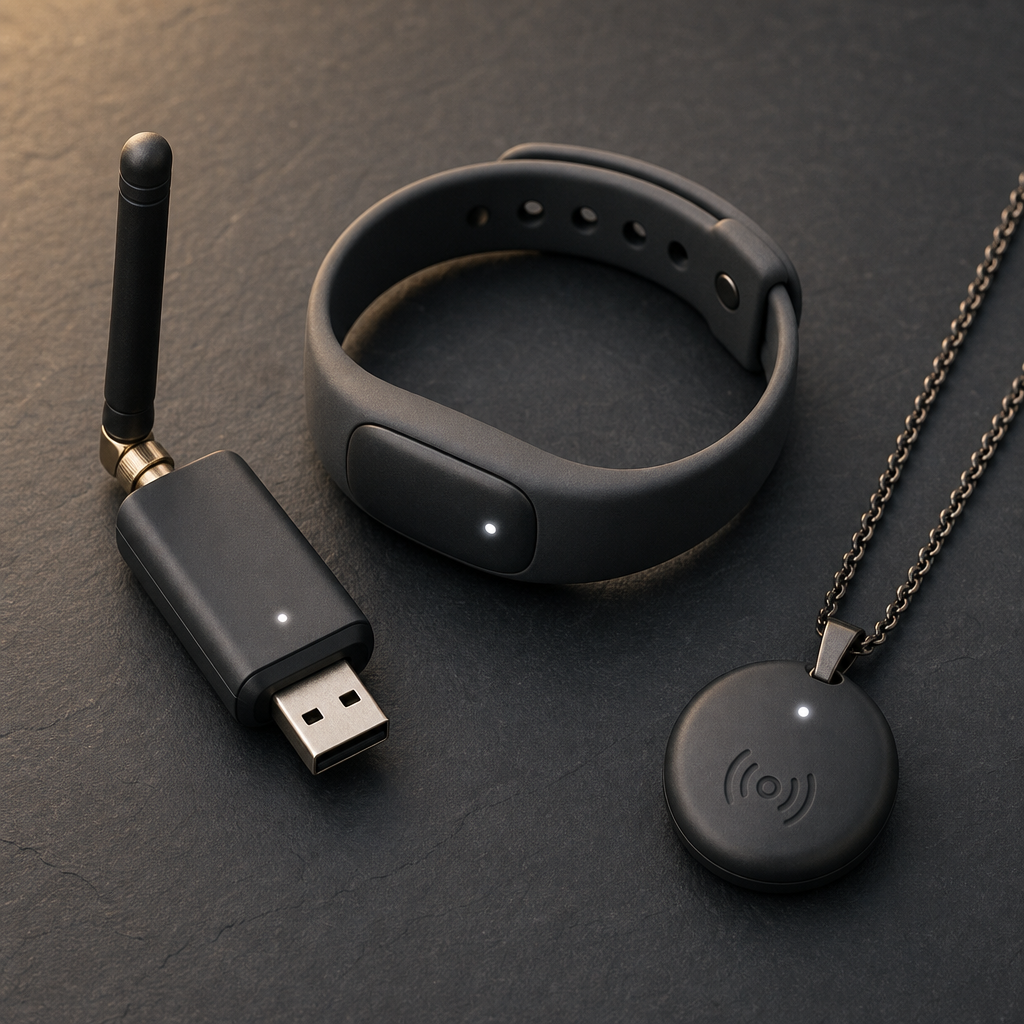
LoRa Dongle
A compact USB-style dongle housing the LoRa radio chip and GPS module. Designed for school bags, sports equipment, and daily carry. Water resistant, rechargeable via USB-C.
- Range: up to 10km line-of-sight
- Battery: 72hr standby
- GPS + LoRa dual signal
- USB-C charge, IPX4
LoRa Bracelet
A tamper-aware wristband with an embedded LoRa chip and silent vibration alert. The bracelet pulses when it reconnects to a mesh node — the child feels it, reassuring them help knows where they are.
- Tamper alert on removal
- Vibration + LED indicator
- 7-day battery
- Waterproof IPX7
LoRa Pendant
A discreet round pendant for older children and teens who won't wear a bracelet. Engraved with a subtle signal icon. Single SOS button triggers an emergency ping through the nearest mesh node.
- SOS single-button trigger
- Discreet, no screen
- 14-day battery
- Stainless + silicone
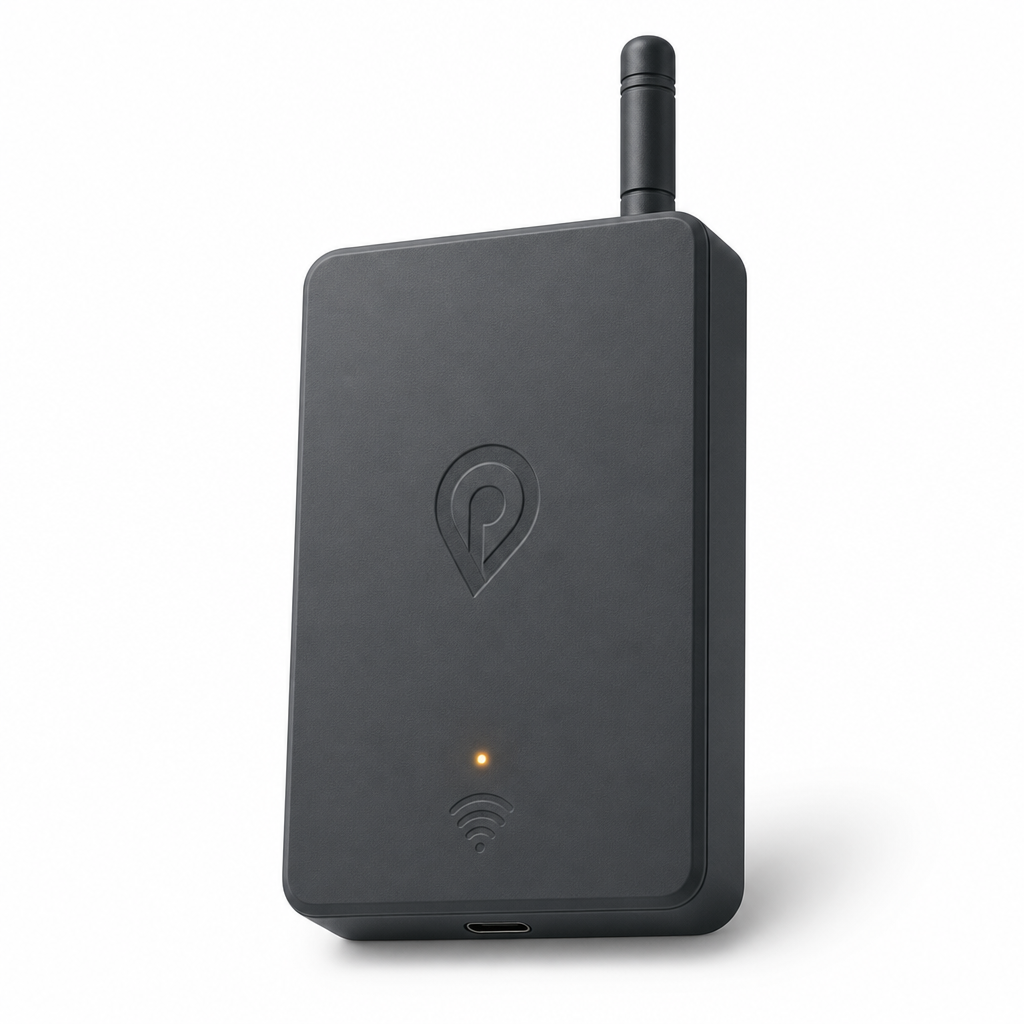
LoRa Transponder
A fixed transponder that mounts in the home, vehicle, or business. It acts simultaneously as a folio-pin mesh relay node — forwarding emergency messages and neighborhood communication — and as a LoRa Safety base station, receiving and relaying child locator pings from all four wearable form factors within range. One device, two critical roles.
- Dual-role: mesh relay + child locator base station
- Always-on with battery backup
- Extends range for all wearables in the neighborhood
- Covers 3–5km radius
- Wall-mount or vehicle install
- USB-C power, compact form factor
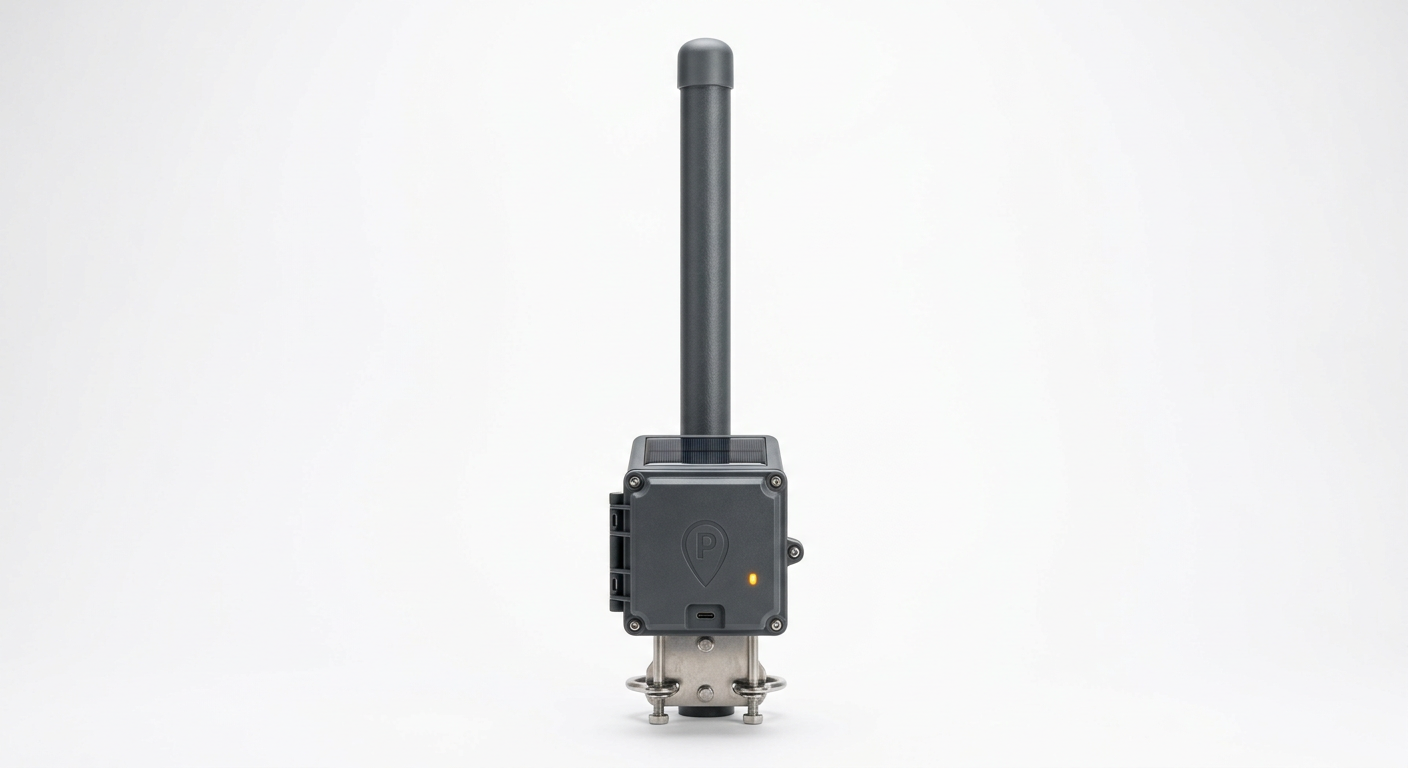
LoRa Base Station Antenna
A mast-mounted omnidirectional antenna with a high-gain 8 dBi fiberglass radiator tuned to the 902–928 MHz band. It focuses the signal horizontally along streets, rivers and open water, and a 1-watt inline amplifier carries packets around trees and buildings. Pair it with an NGTlink transponder to anchor a township-scale mesh.
- 8 dBi marine-grade fiberglass omnidirectional mast
- 10 mile radius, about 314 square miles, in open terrain
- SX1262 or SX1302 LoRa radio with ESP32-S3 or RP2040
- 1 W (30 dBm) inline power amplifier
- IP67 enclosure, 18650 cell and top-mounted solar panel
- Runs fully off-grid with no wired power or backhaul
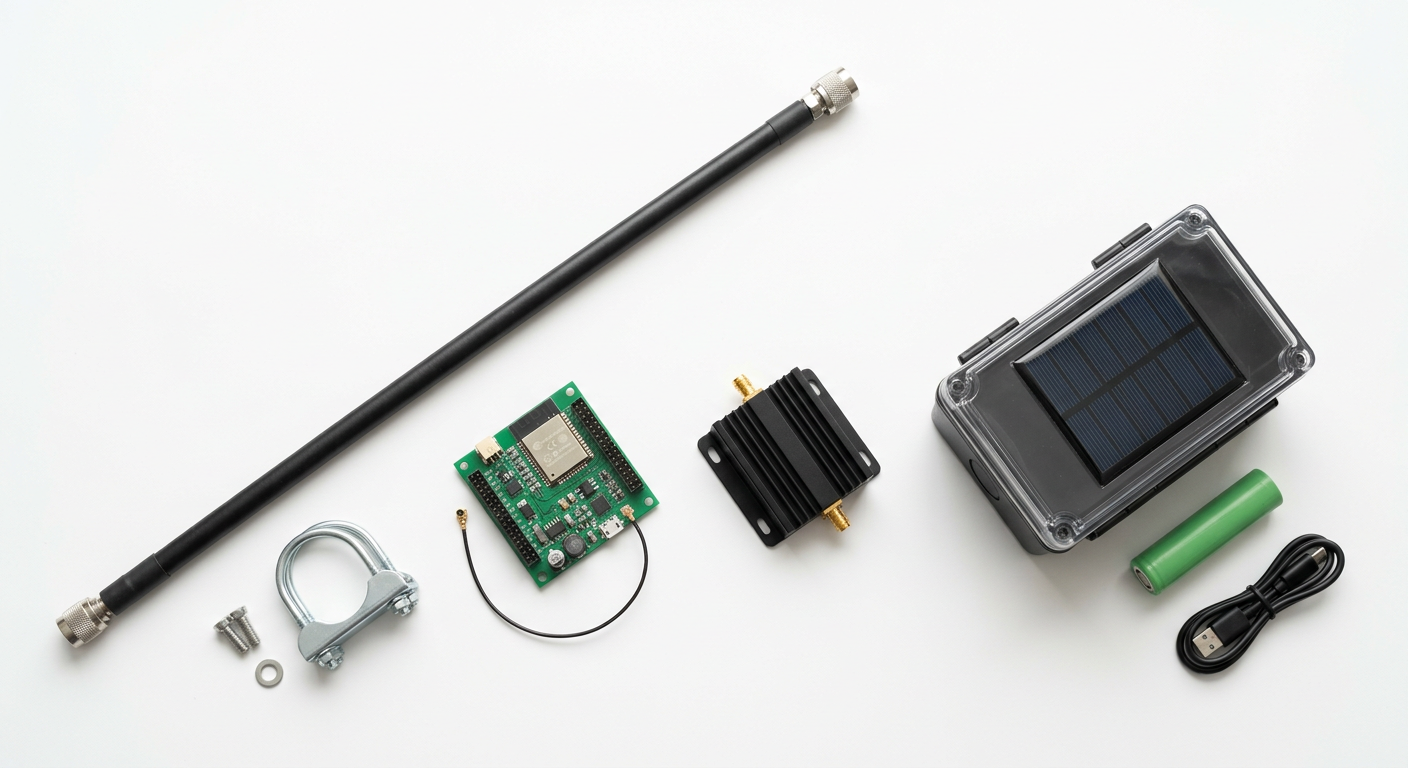
Bill of materials
Off-the-shelf parts, no specialized manufacturing line. A complete, deployment-ready node costs $65 to $130.
- Fiberglass antenna mast
- 8 dBi, 902–928 MHz
- Core radio board
- SX1262 / SX1302 + ESP32-S3 or RP2040
- Power amplifier
- 1 W (30 dBm) inline, bi-directional
- Enclosure and power
- IP67 box, 18650 cell, solar panel
- Complete node $65 – $130
Range figures assume line of sight. Confirm the combined amplifier and antenna output meets FCC Part 15 limits for the 902–928 MHz band before deployment.
How It Works
Radio + cellphone hybrid. Internet optional.
Most child trackers require a cell signal or Wi-Fi. Folio-Pin LoRa devices transmit on the 915MHz sub-GHz band — the same frequency used by the folio-pin Mesh Network — so location data moves through neighbor nodes to your phone even when every tower is down.
- 1Device pings GPS coordinates every 30 seconds
- 2Signal routes through cellular or Wi-Fi to the folio-pin app
- 3Parent sees live map location on their phone
- 4Geofence alerts fire if child leaves a defined area
- 1Device detects loss of cellular and Wi-Fi automatically
- 2Switches to LoRa 915MHz radio broadcast within 15 seconds
- 3Signal hops through nearby folio-pin mesh nodes
- 4Parent receives SMS text via the last reachable cell node
- 5Location updates continue until mesh or cell is restored
Signal path when internet is down
LoRa device on child
Broadcasts GPS on 915MHz
Mesh node — neighbor's home
Receives and relays the signal
Second mesh node
Hops toward the nearest cell signal
SMS to parent's phone
Delivered via last reachable cell node — no app needed
Built for the moments that matter most
Storm evacuation
During a hurricane or wildfire evacuation, cell towers are overwhelmed. LoRa Safety keeps your child's location broadcasting through the mesh even as you're separated in traffic or evacuation shelters.
Crowded events
Concerts, fairs, beach days, sporting events. The bracelet vibrates when it reconnects to a mesh node, so children know they're being tracked — and parents get an alert if the device moves outside a geofence.
Power outages
When the grid goes down, so does your router and sometimes your cell signal. LoRa Safety stays on its own 7–14 day battery and transmits through the neighborhood mesh for days.
Privacy-first design
Location data is encrypted end-to-end and only shared with the registered parent account. Mesh nodes relay the signal without storing or reading the contents — no third party sees your child's location.
There is no near-equivalent geospatial technology.
No existing mapping or geospatial platform combines verified business identity, off-grid radio mesh communication, LoRa child location relay, emergency contractor indexing, live food truck pins, and structured payment enforcement on a single shared node network. Folio-pin built this infrastructure from the ground up — every verified member is a live, addressable geographic node, and every application on the platform shares that same foundation.
Trade map + permit verification
Every licensed contractor, muralist, sign painter, and creative professional is a verified geographic node. When a storm hits, those nodes surface in search immediately — no other platform has this pre-indexed.
Food truck + restaurant live pins
Food businesses that join the mesh network appear as live pins on the food map automatically — no duplicate listing, no separate database.
Mesh Network — off-grid communication
The Sub-GHz mesh keeps neighborhoods connected when internet and cell towers fail. Every transponder added strengthens coverage for all applications simultaneously.
LoRa Safety child locator
The same mesh nodes that relay emergency messages relay child location data. LoRa Safety works because the mesh already exists — no separate infrastructure required.
Emergency contractor surge
Pre-indexed verified contractors surface in post-storm search results because their location and permit data is already structured and indexed before the storm.
Folio Pay — structured transactions
The same verified identity layer that powers map listings enforces the 50/50 escrow structure — the trust layer is built into the platform, not bolted on.
This platform architecture — combining geographic verification, mesh relay networking, radio/cellular hybrid communication, and structured payment enforcement on a single node network — is covered under folio-pin's patent pending application. View patent figures →
Patent Pending — Hardware, Software & Geospatial Platform
The LoRa Safety hardware family — dongle, tamper-aware bracelet, SOS pendant, and dual-role transponder — together with the radio/cellular hybrid routing software and the underlying geospatial node platform are covered under folio-pin's pending patent application. There is no near-equivalent geospatial technology combining these capabilities. Novel claims include: LoRa mesh-to-SMS location relay, tamper-aware wearable with vibration reconnect confirmation, dual-role transponder as both mesh relay and locator base station, and the multi-application verified geographic node platform enabling trade search, food maps, emergency response, child location, and structured payments from a single shared infrastructure. This page constitutes public disclosure as of the application filing date.